
Start investing
You've decided to put your money to work in real assets — stocks, ETFs, bonds. This page shows you the path, step by step: from your first account and first purchase to profit, withdrawals, and reinvesting.
- The 9 steps
- Account & regulated broker
- First purchase
- Proper portfolio
- Dividends & reinvesting
- Profit & withdrawals
The community of traders and investors in Moldova
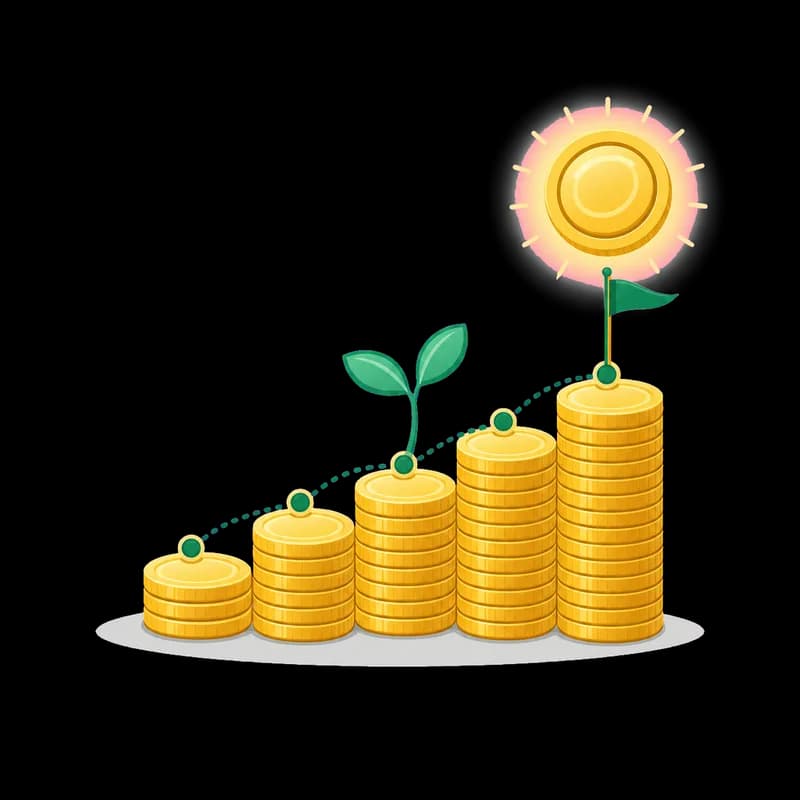
Investing isn't a niche practice: in the US, about 62% of adults own stocks (Gallup, 2025). This guide is for someone who wants to put their money to work over the long term — to buy and hold stocks, ETFs, or bonds — not to make short-term trades every day. If you're still not sure what each of these means, start with what investing is; here you go straight into "how it's done."
Your first purchase isn't the finish line — it's just the beginning. Below, we cover the whole path: what to decide first, what account to open, through whom, how to fund it, how to buy, what to do with your dividends, how to track the market for new opportunities, and how to withdraw your profit. If active trading appeals to you more, there's a separate path — from zero to trader.
Before your first account
Four things to sort out before you open anything. Each one has its own page if you want to go deeper.
Why you're investing
Your goal dictates everything else: extra income alongside your salary, or capital growth over the years. See passive income and financial independence.
Over what horizon
Investing works over years, not days. Put in money you won't need tomorrow.
How much to allocate
There's no "right" amount for everyone. What matters is how much you can set aside without affecting your current expenses.
What to understand first
What a stock, an ETF, and a bond are, and how they differ from trading on price difference. In short: what investing is.
The 9 steps
Set your goal and horizon
Before any account, answer two questions: why you're investing and for how long. Someone saving for retirement over the next 20 years and someone who wants extra income alongside their salary within a few years don't buy the same things and don't react the same way when the market drops. Write your goal down in two lines — it's the benchmark for every decision below.
Choose the right path: an investment account, not a trading account
With an investment account, you buy assets you truly own — a stock, a fund unit (ETF), a bond. That's different from a contract-for-difference (CFD) trading account, where you don't own the asset but track the price difference, usually with leverage. For long-term investing, you need the first type.
Choose a regulated investment broker
The first rule, with no exceptions: the broker must be regulated. Regulation means the firm is supervised by an authority and follows client-protection rules. Among the partners that accept residents of Moldova for investing in real assets: Swissquote Bank and Interactive Brokers. Saxo Bank only works with clients holding European Union documents. Compare them by cost, available markets, and platform.
Open your account and pass verification
Every regulated broker requires identity verification — the process is called KYC (short for "know your customer"). You'll need to provide an ID document (national ID or passport) and proof of address. You can also open the account yourself, directly with the broker.
Fund your account
International accounts usually operate in dollars (USD) or euros (EUR) — but also in other currencies, depending on the case. Your money in lei (MDL) is converted into foreign currency on transfer, and the exchange rate and conversion fee are real costs that add up over the long term. In some cases there's also a cost for the transfer itself.
Make your first purchase
Now you buy your first asset — a stock or an ETF. You have two ways to place an order: at the current market price (market order) or at a price you set yourself (limit order — it only executes if the market reaches the requested price). After the purchase, you're the real owner of the securities, even though, technically, they're held with a custodian — an institution that keeps the securities safe.
Build a proper portfolio
Don't put everything into a single company. A proper portfolio spreads your money across several assets and sectors, matched to your goal and horizon. Four things keep it healthy: time (a long horizon), diversification, solid companies, and low costs. How allocation works, what the classic models are (60/40, All-Weather), and a calculator to try them out — it's all on the dedicated page.
Dividends, reinvesting, and tracking the market
Some companies pay you dividends — money you can either take as cash or reinvest. Reinvesting puts your gains to work further and speeds up growth over the years: historically, the US stock market (the S&P 500 index) has delivered an average return of around 10% a year in nominal terms since 1957 — roughly 7% after inflation (historical data, NYU Stern / Damodaran). Past returns don't guarantee future results. This is also where the ongoing part begins: you systematically follow the market and the news, to catch new opportunities.
Profit, withdrawals, and the road to independence
The goal isn't the first purchase — it's what you build after it. Whenever you want, you can withdraw your profit or part of your capital: you sell the securities, and the money moves from your investment account to your bank account — at home, in Moldova, or to an account in another country, whichever suits you. Keep transfer costs and tax in mind. Over the long term, a portfolio that grows and gets reinvested becomes the very road to financial independence: the point where your investment income covers your expenses.
Is it legal in Moldova?
Yes. Investing through regulated international brokers is permitted for residents of Moldova. On the dedicated page, you'll find the legal framework explained, with sources.
Taxation, in brief
Here we're talking about investments made through brokers outside the country, in assets from other countries. In Moldova, you declare and pay tax on what you earn:
- Capital gains (the profit from selling your securities): an effective rate of about 6% — half of the gain is included in taxable income, which is then taxed at 12%.
- Dividends from foreign companies: 12%.
You file through Forma CET18, by April 30 of the following year. Dividends may also be partially withheld at source, in the company's country — the details, with examples, are on the dedicated page.
Mistakes at the start
- 01You start without a goal and without rules, and buy on impulse.
- 02You chase what's trendy instead of following a plan.
- 03You panic-sell at the first dip — exactly the moment you shouldn't.
- 04You ignore the costs: currency conversion, commissions, the spread (the difference between the buy price and the sell price).
- 05You put all your capital into a single company.
- 06You get drawn in by very high dividends, without noticing that a stock can lose more in price than the dividend pays you.
- 07You put your money into weak companies or little-known startups, instead of large, stable companies (blue chips) or companies in sectors with growth potential.
Frequently asked questions
There's no amount that works for everyone. It depends on how much you can allocate without affecting your day-to-day expenses. With small amounts, conversion costs and commissions weigh more as a percentage.
It depends on the broker and how quickly you get through identity verification. It's usually a matter of days, but in some cases it can take longer, depending on the checks involved. We help you with the steps so it goes as fast as possible.
It depends on your time, your money, and your temperament. Investing takes patience and a horizon of years; trading takes daily time and a higher tolerance for risk. If the second one appeals to you, see the trader's guide.
Many beginners prefer a broadly diversified ETF over a single stock, so they don't put everything into one company. The decision depends on your goal and horizon — we discuss it during a consultation.
Yes. At regulated brokers, your securities are held separately from the firm's money, in a depositary. If the broker goes bankrupt, your stocks aren't lost: they remain in the depositary, and you open an account with another broker, who connects your assets so you can keep seeing and using them. In addition, many jurisdictions have investor compensation schemes — for example, up to €20,000 in the European Union or $500,000 in the US (SIPC), depending on the broker's jurisdiction. These cover cases of fraud or insolvency, not market losses — that is, a drop in asset prices.
You can invest through us or directly with the broker. The difference: with us, you always have someone by your side, in Chisinau, in Romanian. We inform you about everything, down to the procedures, assist you along the way, and stay available for support. We usually get things done faster than you would on your own, and sometimes we can secure benefits for you, thanks to our long-standing, solid relationships with our partners.
Next step
Tell us where you stand and what you want to achieve. In a free consultation, we'll go through the steps above together, based on your situation — with no obligation to open anything.
Investing in financial assets involves risks, including the loss of part of the capital invested. Past returns don't guarantee future results.
Disclaimer. This material is for educational and informational purposes only and does not constitute investment advice, personalized financial counsel, or a recommendation to buy or sell any particular instrument. Trading.md is not a broker; it facilitates access to regulated international brokers. Investment decisions are yours to make; for your specific situation, consult a specialist.